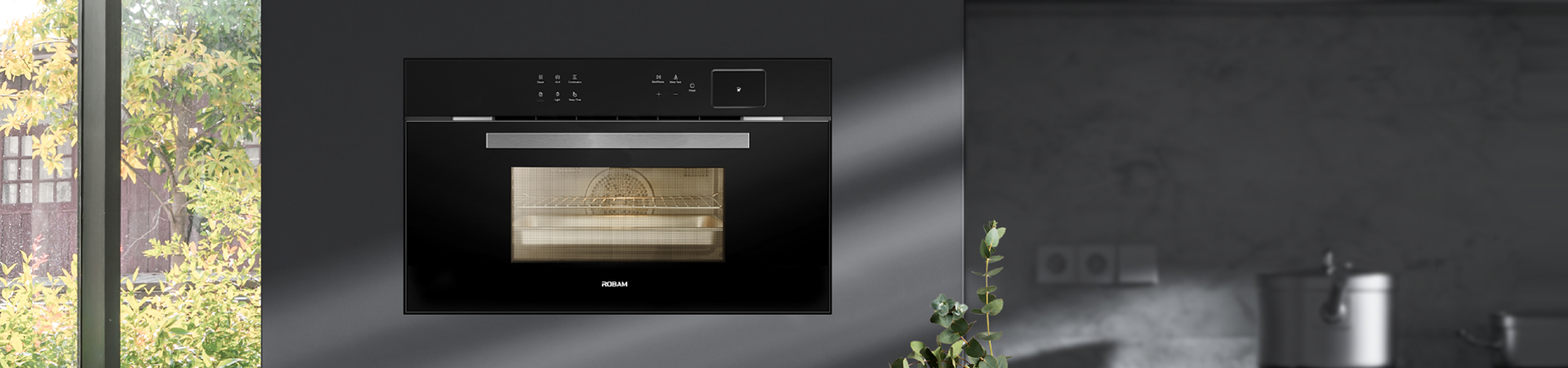



For years the range hood was the appliance everyone tried to hide. Today it's one of the most deliberate design decisions in the room — and the best kitchen hood ideas treat it as a feature, not an afterthought. Whether you want it to disappear into the cabinetry or stand up as the centerpiece, the range hood sets the tone for the whole kitchen.
This guide is a tour of range hood ideas by style, mood, and kitchen size — from bold statement pieces to a discreet under-cabinet range hood that all but vanishes. Along the way we'll cover modern and contemporary looks, made-to-fit hood surrounds, decorating ideas, and small-kitchen solutions, so you can picture the right hood for your space.
The best kitchen hood ideas balance two things: how the hood looks and how well it works. A hood can be a sculptural focal point or a near-invisible line in the cabinetry, but it still has to move the air your cooking produces. Design first, then confirm the power — the most beautiful range hoods are the ones that do both.
Beautiful Range Hoods: Why the Hood Is Now a Focal Point
Walk through any recent kitchen remodel and you'll notice the hood doing real design work. Because it sits at eye level, centered over the range, the eye lands on it the moment you enter the room — which is exactly why so many beautiful range hoods are designed to be seen. A bold chimney hood anchors a wall the way a fireplace anchors a living room; a sleek black-glass hood reads like a piece of modern art. These hood ideas work because the hood is one of the few elements in a kitchen that is both functional and vertical, giving a flat run of cabinetry a strong focal point.
The opposite approach is just as intentional. Some of the most elegant kitchens make the hood recede — wrapping it in the same material as the cabinets, or tucking the working parts into an insert so only a clean surround shows. Either way, the decision is deliberate: you choose whether the hood is the star or the supporting cast. Both are good kitchen hood ideas; what matters is that the choice is made on purpose.
Modern & Contemporary Kitchen Hood Design Ideas
Modern kitchen hood ideas lean on restraint. The look is clean lines, flat surfaces, and as little visual clutter as possible — no fussy trim, no exposed hardware. Contemporary kitchen hood design favors materials that feel architectural: brushed stainless steel, matte black, and especially black tempered glass, which gives a hood a seamless, screen-like face. A slant-vent (angled) wall-mount hood is the signature contemporary silhouette right now, leaning back toward the wall so it feels light rather than bulky.
Technology is part of the modern look, too. Touch or gesture controls replace physical buttons, so the front stays a smooth, uninterrupted surface; hidden LED strips wash the cooktop in warm light; and auto-sensing fans adjust on their own, so the hood stays quiet and understated until it's needed. ROBAM's black-glass slant-vent hoods are built around exactly this modern kitchen range hood ideas language — glass fronts, concealed controls, and integrated lighting — which is why they slot cleanly into a minimalist or contemporary scheme without looking like an appliance bolted to the wall.
Kitchen Range Hood Design Ideas by Style
Most kitchen range hood ideas come down to a handful of mounting styles, and each one creates a different look. Here's how the main range hood ideas compare as design moves:
| Hood style | The look it creates |
|---|---|
| Wall-mount / chimney | The classic statement piece — a vertical anchor on the main cooking wall. |
| Island | A sculptural centerpiece suspended over the island, visible from every side. |
| Under-cabinet | Clean and discreet — tucks beneath cabinets for an uninterrupted run. |
| Insert / built-in | Hidden inside a made-to-fit surround so only your chosen material shows. |
| Downdraft | Invisible until use — rises from behind the cooktop, then disappears. |
A statement wall-mounted kitchen hood is the easiest way to give a plain wall a focal point, while an island hood turns the center of the room into the main event. If you'd rather the ventilation stay quiet, an under-cabinet or insert model keeps the sightline low and calm. None of these kitchen range hood design ideas is "better" than the others — the right one depends on your layout and how much you want the hood to speak.
Range Hood Ideas for Every Kitchen Style
The same hood that looks perfect in one kitchen can feel wrong in another, because the best range hood ideas follow the style of the whole room. Matching the hood to your kitchen's aesthetic is what separates a thoughtful choice from a random one. Here's how the main looks tend to pair up:
- Modern & contemporary — a slant-vent black-glass or slim stainless hood with concealed controls. These modern kitchen range hood ideas keep the front flat and architectural, letting the material do the talking.
- Farmhouse — a wood or plaster surround, often painted to match the cabinets, with optional metal straps. The hood becomes a warm, chunky anchor over the range.
- Industrial — exposed stainless steel, bold rivets or banding, and a chimney form that leans into the utilitarian look rather than hiding it.
- Transitional — a clean stainless or glass hood that adds a quiet modern note to an otherwise classic room; the easiest way to keep a kitchen timeless.
- Coastal & Mediterranean — a smooth plaster hood in a soft white or sand tone, sculpted into the wall for an airy, organic feel.
Notice that the ventilation underneath can be identical across all five — what changes is the surround and finish. That's the freeing part of these kitchen hood ideas: you pick a hood (or insert) with the airflow you need, then style it to match farmhouse, modern, or anything in between. The look is a finish layer; the performance is the engine beneath it.
Building a Made-to-Fit Range Hood: Covers and Surrounds
When people picture a hood that looks built for the room, this is often what they mean: a one-of-a-kind look, made to fit the space. Building a made-to-fit range hood almost always means pairing a powerful insert or liner with a decorative surround you design yourself. The insert does the work; the surround sets the style. Popular materials include:
- Plaster or stucco — a smooth, sculpted hood that reads as part of the architecture, perfect for modern, Mediterranean, or minimalist kitchens.
- Wood — painted to match the cabinets for a seamless look, or left natural for warmth and contrast.
- Stone or tile — a surround clad in the same marble or zellige as the backsplash, framing the range like a hearth.
- Metal straps and trim — stainless or brass banding for an industrial or farmhouse accent.
The key to any made-to-fit hood project is to choose the insert first, by airflow, and then design the surround around it — never the reverse. A gorgeous plaster hood with an underpowered fan is a disappointment every time you cook. Match the insert's capture area and CFM to your range, then let the surround express the style.
Kitchen Hood Decorating Ideas and Range Hood Decorating Ideas
You don't need a full remodel to refresh a hood. Plenty of kitchen hood decorating ideas work with what's already there. If you have a chimney or a built surround, adding a band of molding or a contrasting trim at the base instantly sharpens the look. Painting a wood surround to match — or deliberately contrast — the cabinets changes the whole mood. Framing the hood with a statement backsplash, running tile or marble all the way up behind it, turns the whole wall into a composition.
Lighting is one of the most underrated range hood decorating ideas. Warm LED lighting under the hood makes the cooktop glow and flatters the materials around it; a pair of pendants flanking an island hood balances the vertical mass. For stainless or black-glass hoods, the decorating is mostly about keeping them pristine — the clean surface is the style. These cooker hood ideas (as they're known in the UK) prove that small, inexpensive touches can make an ordinary hood feel designed.
Color, Finish, and Material Ideas for a Standout Hood
Color and finish do as much as shape to make beautiful range hoods. The material you choose sets the hood's personality before anyone notices its silhouette, so it's worth treating finish as its own design decision. A few directions that consistently work:
- Stainless steel — the versatile default. It ties into stainless appliances, resists heat and grease, and reads as either professional or minimalist depending on the form.
- Black tempered glass — the modern favorite. A black-glass front is sleek and screen-like, hides fingerprints better than you'd expect, and makes concealed touch controls look seamless.
- Matte black metal — bold and graphic against white or wood cabinets; a strong focal point without the shine of stainless.
- White or painted — a hood or surround painted to match white cabinetry disappears into the wall, which is one of the smartest small-kitchen and minimalist range hood decorating ideas.
- Brass or mixed metals — straps, trim, or a full metal hood in a warm tone for a boutique, collected feel; pair with matching hardware to pull the room together.
Finish also drives upkeep, and that's part of the decorating decision. Stainless and black glass wipe clean and suit a hard-working cooktop; plaster and painted wood look soft and architectural but want gentler care. Whatever you choose, keep the surfaces around the hood — the backsplash, the adjacent cabinets — in a complementary palette so the hood feels designed into the room rather than dropped onto the wall. These small finish choices are what turn generic kitchen hood ideas into a look that feels bespoke.
Small Kitchen Range Hood Ideas
A small kitchen doesn't mean settling for weak ventilation or an ugly box. The best small kitchen range hood ideas are about proportion and integration. A slim under-cabinet hood keeps the sightline unbroken and doesn't eat into the headroom of a tight galley. Keeping the hood the same color as the cabinets — white on white, or a slim stainless line against stainless appliances — makes a compact kitchen feel larger and calmer. Convertible hoods are a small-kitchen favorite because they can vent outside or recirculate, giving you flexibility when ducting options are limited.
That flexibility is where a ductless range hood earns its place in small kitchen vent hood ideas. In an apartment or an interior wall with nowhere to run a duct, a recirculating hood filters the air and returns it to the room, so you still get a clean, finished look without a visible duct run. Just remember the design-plus-power rule: even in a small kitchen, choose enough airflow for how you actually cook — a compact hood can still be a strong one.
Kitchens with Hoods: Pictures and Inspiration
Browsing pictures of kitchens with modern hood vents ideas is the fastest way to find your direction, and a few clear themes repeat across the best examples. Kitchens with hoods that feel calm usually match the hood to the cabinetry so it blends in. Kitchens that feel dramatic do the opposite — a black hood against white cabinets, or a sculptural plaster form over a pale island. Transitional kitchens split the difference, using a stainless or glass hood as a quiet modern note in an otherwise classic room.
When you collect inspiration, look past the hood itself to how it relates to everything around it: the backsplash behind it, the cabinets beside it, the lighting above it. The kitchens with hoods that photograph best are rarely about one expensive appliance — they're about how the hood, the materials, and the light work together. Save the images that share your cabinet color or your kitchen's proportions; those are the modern kitchen hood ideas you can actually reproduce.
Getting the Scale Right: Height, Width, and Proportion
Even the most beautiful hood falls flat if the proportions are off, so scale deserves as much attention as style. The best kitchen range hood design ideas get three measurements right. Width comes first: the hood should be at least as wide as the cooktop, and a hood that's a few inches wider on each side both captures better and looks more deliberate — a narrow hood stranded over a wide range always looks like an afterthought. Mounting height is next. Most hoods sit 24 to 36 inches above the cooktop; too low and it crowds the cook and dominates the view, too high and it floats awkwardly and loses capture. The right height makes the hood feel intentional and keeps sightlines clean across the kitchen.
Visual weight is the third, more subjective piece. A big statement hood needs room to breathe — flanking cabinets or open wall around it — or it can feel heavy. In a compact kitchen, a slimmer profile keeps the room from feeling top-heavy, which is why so many small kitchen range hood ideas favor low-profile under-cabinet forms. On an island, remember the hood is seen from every angle, so its depth and finish matter as much as its face. Think of the hood as a piece of furniture floating over the range: its size should relate to the cooktop below it, the cabinets beside it, and the ceiling above it. Get that relationship right and even a simple hood looks bespoke; get it wrong and even an expensive one looks out of place. These are the quiet kitchen hood ideas that photographs reward and everyday cooking confirms.
How to Choose a Hood That Fits Your Style — Without Losing Power
Here's the trap that catches a lot of design-led buyers: choosing a hood entirely on looks and discovering, the first time they sear or stir-fry, that it can't clear the air. A beautiful hood that doesn't vent well isn't a good design — it's a daily frustration. The fix is simple. Settle on the style and mounting that suits your kitchen, then confirm the airflow before you buy. As a rough guide, plan on roughly 250–400 CFM for light electric cooking, 400–650 CFM for a typical gas range, and 900 CFM or more for frequent high-heat or wok cooking, and size the hood at least as wide as your cooktop.
A good rule of thumb is to lock in the three design decisions first — mounting style, finish, and proportion — and treat airflow as the non-negotiable that every option has to clear. If a hood you love can't move enough air for your cooking, keep the look and move up a model, rather than keeping the model and giving up the capture. Style and power aren't a trade-off you have to make anymore; they're two boxes to tick on the same hood.
The good news is that you no longer have to trade style for strength. Modern hoods — ROBAM's included — pair design-forward fronts (black tempered glass, slim stainless, concealed controls) with the high suction serious cooking needs, up to 1,400 CFM on the top models, plus washable stainless baffle filters and smart, quiet operation. That's the whole point of these kitchen hood ideas: the hood should look like it belongs in a design magazine and perform like a tool. Start from the full range hood collection, narrow by the style that fits your kitchen, and check the CFM against how you cook.
FAQ: Kitchen Hood Ideas
Should my range hood match my cabinets or stand out?
Both are valid design choices. Matching the hood to the cabinets (same color or material) makes the kitchen feel calm and seamless; a contrasting hood — black against white, stainless against wood — makes it a focal point. Decide which role you want the hood to play, then commit to it.
What is a range hood cover or surround?
It's a decorative shell — plaster, wood, stone, or tile — built around a working insert or liner. The insert provides the ventilation; the surround provides the style. It's the most flexible way to get a one-of-a-kind hood that matches your kitchen exactly.
Can a range hood be a focal point in a small kitchen?
Yes, but keep it proportional. In a small kitchen, a slim statement hood or a glass-front model can still draw the eye without overwhelming the space. If you want the opposite effect, match the hood to the cabinets so it blends in and the room feels larger.
Do beautiful or ductless hoods still vent well?
They can, as long as you choose the airflow for your cooking. Looks and power aren't opposites — plenty of design-forward hoods move 900–1,400 CFM. A ductless model vents a little less effectively than a ducted one, so size up the airflow and keep the filters fresh.
How do I hide or integrate a range hood?
Use an insert or built-in unit concealed inside a surround that matches your cabinets, or choose a downdraft that rises only when you cook. Both approaches keep the ventilation nearly invisible while still clearing the air.
What's the most modern range hood style right now?
The slant-vent (angled) wall-mount hood with a black tempered-glass front and concealed touch controls is the signature contemporary look. Minimal, architectural, and screen-like, it suits modern and transitional kitchens alike.
How wide should my hood be?
At least as wide as the cooktop, and ideally a few inches wider for better capture — a 30-inch range pairs with a 30- or 36-inch hood. Width affects both performance and how balanced the hood looks over the range.
Are island range hoods harder to design around?
They ask for a little more thought because they're seen from every side and hang in open space, so depth, finish, and the back of the hood all matter. Done well, an island hood is the single strongest focal point in the kitchen — just make sure its scale suits the island and the ceiling height.
Is a made-to-fit range hood expensive?
Not necessarily. Building a surround around a standard insert is often more budget-friendly than a premium pre-made designer hood, because the decorative shell can be built from everyday materials like painted wood or plaster. You're paying mainly for the insert's performance, then styling it yourself.